




AVAILABLE FOR SALE: 200MM FAB, EUGENE, OR
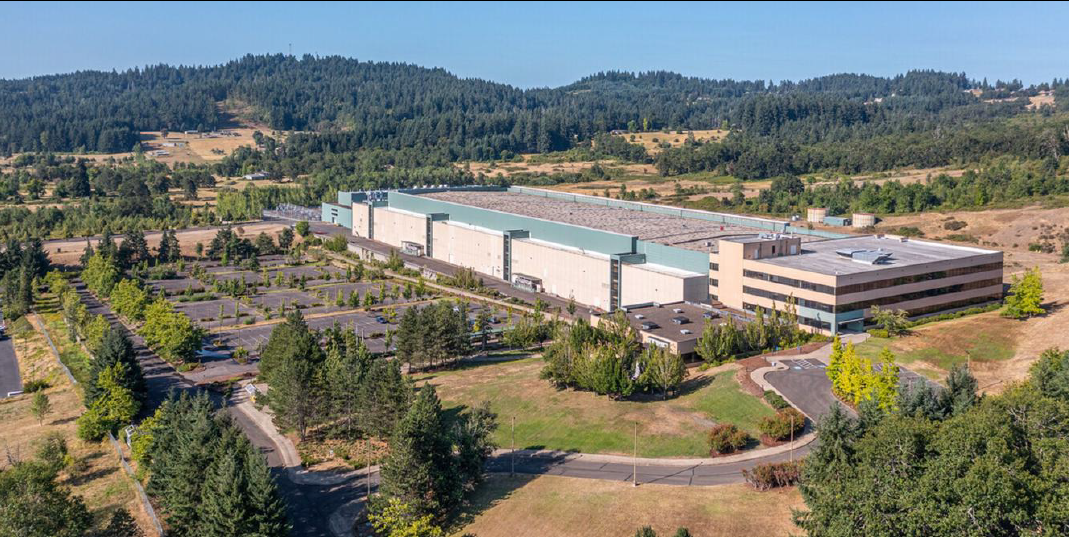
ATREG has been exclusively engaged to facilitate the disposition of a large-scale cleanroom manufacturing facility located in Eugene, OR. Originally built by SK Hynix for 200mm memory production, the 200-acre site offers a semiconductor-grade cleanroom facility of a scale rarely available in today’s market, with existing utility infrastructure providing a head start on a buyer’s buildout. The site is permitted and ready for a new occupier in semiconductor or semiconductor-adjacent industries, with no restrictions on title. Power availability is subject to the site’s intended use, application, and employment delivery.
 Key highlights
- Approximately 1.2 million sq. ft. of purpose-built facilities on three floors on a large campus providing significant acreage for expansion
- Former 200mm wafer semiconductor fabrication facility with cleanroom, utilities, and process infrastructure in place
- Approximately 170,000 sq. ft. of potential cleanroom production space
- Primary cleanroom area spanning 120,000 sq. ft. (ballroom configuration) and 21′ from waffle floor to top of interstitial area
- Central utility plant and process systems originally sized to meet 200mm wafer manufacturing requirements
- Substantial installed infrastructure for power, water, and HVAC
- Suitable for a broad range of semiconductor and semiconductor-related applications
Site tours are being organized now and into October. Please email Senior Vice President Nick Papa or CEO Stephen Rothrock for immediate scheduling and update on the transaction.

ATREG SEMI BLOG POST: QUANTUM COMPUTING ’S CLEANROOM MOMENT
 Last spring, IBM announced it would spin off Anderon as a standalone quantum foundry, separating its fabless chip design work from dedicated 300mm manufacturing. A company that had kept quantum fabrication tightly in house for over a decade made the call that external demand now justified building a business around supplying wafers to others. When such a dominant incumbent decides it is time to build a foundry business, that is a good indication the rest of the industry is not far behind.
Over the past year, ATREG has spoken with a wide range of quantum hardware companies about their facility strategies. Nearly all of them are actively planning some form of scale-up, whether that means leasing cleanroom space, acquiring tools, or exploring options with existing fab operators. In his latest ATREG blog post entitled Quantum’s cleanroom moment published by SEMI this week, ATREG Founder & CEO Stephen Rothrock reports on the findings of these conversations and discusses how the companies driving that shift are bifurcating into two camps — vertically integrated players building or owning captive cleanrooms, and fabless designers routing wafers through commercial foundries – leading to the generation of new fab-transaction demand.
Click here to read the full article.
EXECUTIVE Q&A WITH BLOOM ENERGY
 ATREG recently sat down with Carl Cottuli, Head of Development Engineering at Bloom Energy, to discuss how power is reshaping where companies build beyond the grid. The firm headquartered in San Jose, CA manufactures fuel cell systems that provide ultra-reliable, clean, and highly scalable on-site electricity for Fortune 500 customers around the world, including data centers, semiconductor manufacturing, large utilities, and other commercial and industrial sectors.
Across the industries Bloom serves, how often does power availability determine where a large facility can be built or expanded? Is that a recent shift?
Power availability used to be an operational consideration. Now it is one of the top factors constraining growth and driving location choices. Companies need to establish how they’ll be able to get power to a site before they commit capital to it. This constraint is most visible in data centers, semiconductor manufacturing facilities, and other large-load operations. They need substantial, reliable capacity. And they often need it on timelines that utilities simply cannot meet. For example, power availability is driving data center growth into new regions such as Texas, while legacy markets, including California and Oregon, are losing market share. That’s largely driven by power availability, according to Bloom’s latest data center power report.
The grid constraints are not new — they have always been a concern. What has changed is the rapid growth and scale of demand. AI infrastructure, advanced manufacturing, and electrification are adding large loads faster than traditional power generation and transmission can be expanded. Power strategy needs to be part of the very earliest stages of facility planning, alongside land, labor, logistics, and permitting.
When the utility cannot deliver for years, how does a fuel cell deployment change the timeline?
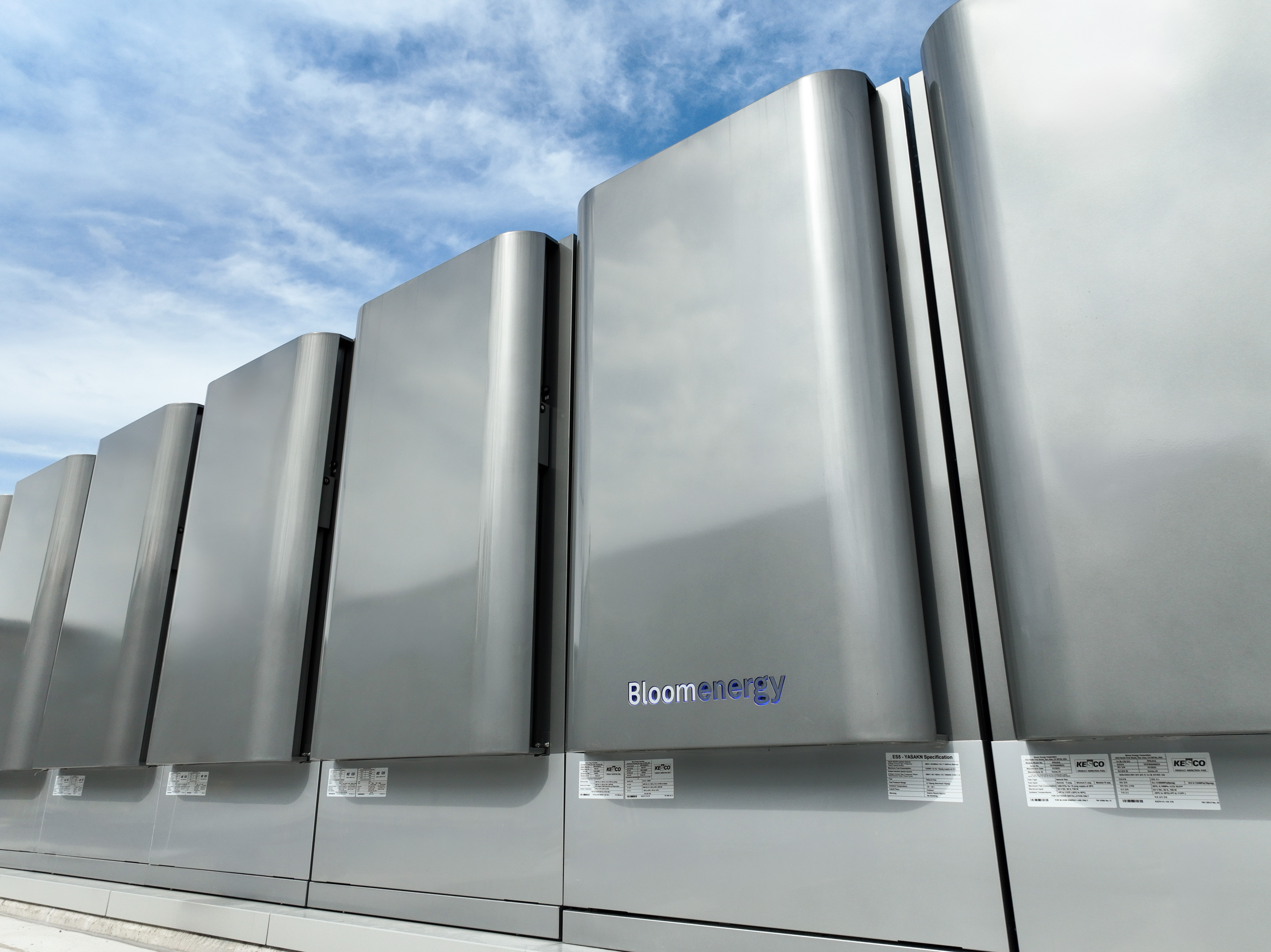
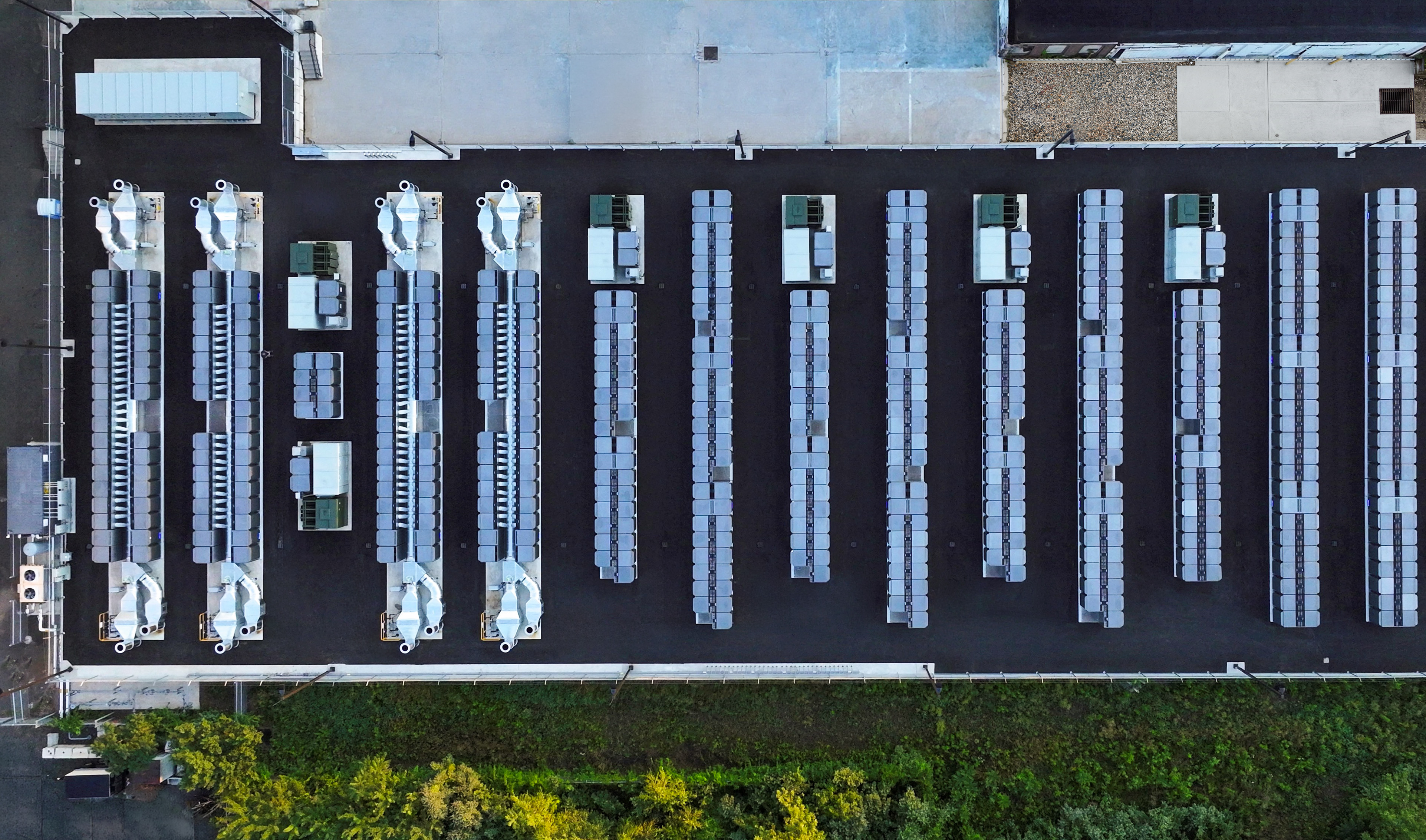
On-site generation puts the customer in the driver’s seat. Instead of waiting for the utility to add generation capacity, establish interconnects, or upgrade their transmission system, customers can create their own power, directly at the facility, when they need it. Bloom Energy Server® systems are modular — customers install capacity incrementally and expand it as load grows, without waiting years for the next transmission upgrade.
Bloom’s delivery lead time is 12 to 18 months, compared with 18 to 24 months for reciprocating engines, 24 to 36 months for simple-cycle turbines, 48 to 60 months for combined-cycle turbines, and an uncertain timeline, likely stretching to years, for grid-supplied power. We can compress a multi-year power timeline into months, subject to permitting, natural gas infrastructure, and site readiness. Essentially, we remove time to power as a constraint.
One key thing to remember is that on-site power doesn’t have to mean abandoning the grid. Bloom fuel cells can run as primary power, inside a microgrid, or alongside utility service — and grid power can easily join the mix, even if it is not available at first. In short, the customer picks the configuration and is not tied to the utility’s timeline. The result: Customers have greater control over construction schedules, capital deployment, and the timing of their commercial operations.
 How does Bloom meet unusually high reliability and power quality requirements?
We design to match or exceed grid reliability where customers need it. Bloom Energy Server fuel cell systems generate power continuously at the point of use, reducing exposure to power disruptions in the grid system. The systems are modular, so individual components can be maintained without taking the rest of the installation offline. This distributed architecture also means that the entire load is not concentrated in a large, monolithic system. Our modular architecture also means that you need a smaller amount of overbuild to achieve the same level of reliability. For example, if you need 100 MW at three-nines (99.9%) availability, you’ll need to install 130–150 MW of gas turbines or 120–130 MW of reciprocating engines. Bloom fuel cells only need a build capacity of 109 MW to deliver the same 99.9% reliability.
Customers can configure Bloom systems within a microgrid to support resilience during grid disturbances or outages. A real-world example: Bloom recently announced a partnership with MiTAC to deploy fuel cell systems for an islanded microgrid at MiTAC’s AI server manufacturing campus in Fremont, CA. This project builds on an existing installation at MiTAC’s San Jose facility and it’s a significant increase to their overall contracted on-site power capacity.
Bloom also combines its equipment with continuous monitoring, concurrent maintainability, and long-term service, giving customers an operating model designed around availability rather than emergency response. What we find is that our customers are not simply purchasing electricity. They are protecting the continuity of their operations and production.
Where is Bloom seeing the strongest international demand, and how do local grid conditions shape its focus?
The strongest near-term demand is currently coming from U.S. AI infrastructure, where the gap between power requirements and grid availability is especially acute. Internationally, we’re prioritizing markets with the same underlying dynamics: Europe, Taiwan, Korea, and Japan. In Japan, we just announced a collaboration with Hitachi to deploy fuel cell systems for data centers and industrial customers, pairing our technology with Hitachi’s operational technology and systems integration expertise.
The demand drivers vary by market. Some regions need power generation, others face transmission congestion, reliability concerns, or limited capacity for new industrial loads. The common thread is that demand for our solution is strongest where customers need reliable power faster than their existing systems can provide it.
What makes the power requirements of semiconductor and advanced manufacturing facilities different from those of other large energy users?
Semiconductor manufacturing combines substantial electrical demand with exacting requirements for continuity, stability, and power quality. In these plants, even a brief interruption to power can damage sensitive equipment, destroy work in progress, and interrupt a production process that may take hours to restart. That makes resilience an economic mandate. It’s not just an operational preference.
Obviously, this is not new to advanced manufacturers such as semiconductor facilities that have long relied on back-up power generation, uninterruptible power supply systems, and other safeguards to protect their production lines. What’s new is that distributed on-site power generation gives them yet another layer of control over capacity and continuity.
How should an operator compare a multi-year utility upgrade with on-site generation?
Any comparison needs to include the cost of waiting. How much does each month of delay in electricity delivery cost you? Even if you commit to on-site power generation, you still may face multi-year waits for gas turbine generators, transformers, and other needed equipment. Utility upgrades can offer substantial long-term capacity, and they may promise lower rates. But utility timing depends on the availability of generation capacity, interconnection studies, transmission construction, permitting, and competing demands on the system. Utilities also face pressure from consumers, municipalities, and other ratepayers who are concerned about the additional load, and that can slow them down even more.
On-site generation gives customers greater control over timing, plus the ability to add capacity in modular increments, rather than through a single, large build. It can also improve resilience and reduce dependence on infrastructure that’s beyond the customer’s control. The trade-offs depend on the site, fuel availability, permitting, and operating profile. The value of speed is also an important factor. So the right comparison is total project economics, not simply the nominal cost of electricity.
For many customers, the answer will be a combination of on-site and utility power rather than a binary, permanent choice between them. Bloom Energy’s on-site power playbook for manufacturers provides checklists of many of the key considerations to take into account.
 Are computing and advanced manufacturing competing for the same energy solutions?
Yes, in some ways. They are competing for many of the same scarce inputs, including utility capacity, suitable sites, electrical equipment, engineering resources, and skilled construction labor. They both need large amounts of dependable power on timelines that the grid cannot meet. On-site generation is how both industries get out of the zero-sum fight for the same grid capacity.
However, their technical requirements are not identical. Advanced manufacturing places great emphasis on process continuity and power quality. Data centers also value those factors, and they also have rapidly changing density and architecture requirements and unpredictable loads, thanks to the demands of AI technologies. IT equipment needs are evolving rapidly, so data centers may have very different power requirements a few years from now.
Bloom is well positioned to address both sectors because its platform is modular, scalable, and suited to facilities that need both fast time to power and operational continuity. Bloom’s solid-oxide fuel cell technology can respond rapidly to second-by-second fluctuations in how much power is needed. Bloom’s U.S. manufacturing base and exact-copy production model also give it the capability to expand capacity in standard increments as demand grows.
How can customers balance immediate power certainty with longer-term decarbonization goals?
You can’t treat reliability and sustainability as separate or sequential decisions. Customers need power now, but they also need infrastructure that remains useful even as their emissions strategies evolve. Bloom Energy Server systems can operate on natural gas, biogas, or hydrogen, giving customers flexibility as lower-carbon fuels become more available and economical.
Because fuel cells generate electricity through an electrochemical process rather than combustion, they produce very low air criteria pollutants, use minimal water, and are much quieter than the alternatives. The high efficiency of fuel cells also allows customers to produce more usable electricity from a given amount of fuel than many conventional on-site alternatives. That means that customers can address their immediate capacity constraints without locking themselves into a single fuel pathway.
How will the relationship between energy infrastructure and industrial growth evolve over the next three to five years?
Power will become one of the first decisions in industrial development, not a utility request that customers make after they have already selected a site and facility. And companies will increasingly design their facilities around the power that they can secure, the time required to deliver it, and the risks of depending on a single source.
The constraints will be broader than simply how many megawatts you can get. Permitting, construction costs, community acceptance, water use, emissions, and grid impacts will increasingly determine whether projects advance. Bloom surveys found that 29% of data center operators and 25% of commercial and industrial facilities plan to have 100% on-site power in 2030, less than four years from now. By 2035, that will rise to 40% of data centers and 35% of commercial and industrial facilities.
The shift to on-site power is happening, and it will be a permanent change in the relationship between industrial customers and utilities. More and more large-load customers will be combining utility service with on-site generation, microgrids, and expandable, modular generation capacity. Industrial and data-center leaders should evaluate power, permitting, and community impact together before they commit to a site. Delaying those decisions will only create schedule and investment risks that communications or procurement teams cannot solve later.
About Carl Cottuli
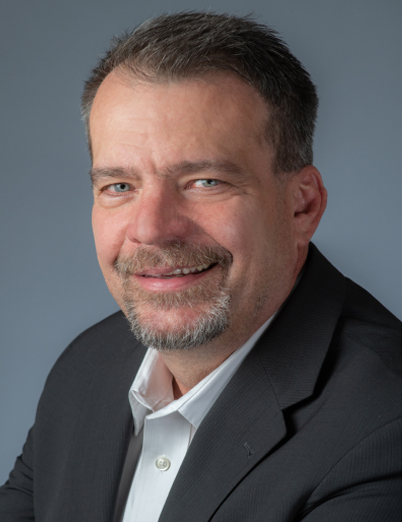 Carl Cottuli holds the role of Head of Development Engineering at Bloom Energy and has the responsibility of setting standards and driving global product development using fuel cell-based technology for application in the electrical and hydrogen environments. He has over 25 years of experience in managing global technical teams engaged in governmental, industrial, and enterprise opportunity engagement. His expertise includes electrical and mechanical product and system design as well as installation for service industries.
While holding senior leadership positions at market-leading corporations, he has been advising on corporate strategy, organizational design, and product roadmaps by focusing his teams on the addressable markets for the various products. Carl’s educational background consists of an Electronic Engineering degree and continuing education in coursework focused on gaining direct knowledge as needed in various roles, including project management, process development, and lean building. Carl has been granted over 40 technology patents for innovations in power, cooling, and fuel cell products.
SEMICON WEST: COME HEAR ATREG SPEAK ON OCTOBER 13
 ATREG is pleased to announce that it has been invited to host two sessions on October 13th at this year’s SEMICON West in the South Hall, Upper Mezzanine, Room 160, of the Moscone Center in San Francisco, CA.
From 1:55 to 2:15 pm, ATREG Vice President Stuart Smith will open the session with a presentation entitled “Decoding the Global Fab Market: Insight into Key Themes Impacting Cleanroom Capacity” that will leverage ATREG’s industry vantage point to give SEMICON West attendees a data-informed, deal-driven read on the state of global semiconductor capacity as well as a unique perspective on the key themes that are driving cleanroom transactions and the challenges that companies face.
This session will be shortly followed by an executive panel discussion entitled America’s Next Fabs: Building Capacity in Real Time – Perspectives from the frontlines of U.S. semiconductor expansion, moderated by ATREG COO Annie Rothrock. Semiconductor manufacturing is relocating at a pace unseen in decades. This panel brings together companies actively expanding U.S. fab footprints to unpack the real decision drivers — power, incentives, labor, and speed to production, including key executives from some of the world’s most reputable global semiconductor industry players:
 Marc Barraco, Chief of Staff, Mohawk Valley EDGE
- Tim Brosnihan, Ph.D., Executive Director of Business Development, Silex MicroSystems
- Christine Dunbar, Senior Vice President & General Manager, Silicon Foundry, SkyWater Technology
- Amitabh Passi, Head of Corporate Development, Network Infrastructure, Nokia
Click here for more information on these sessions. We hope you can join us!
ATREG PARTICIPATES IN ENTEGRIS’ SEMICON EUROPA PANEL
ATREG is delighted to invite you to attend the Entegris executive panel discussion at this year’s SEMICON Europa – Advanced Packaging: From Strategic Imperative to Scalable Reality in Europe – to be held on Wednesday, November 11th from 2:00 to 3:40 pm in Munich, Germany (Executive Forum, Hall C1).
 Moderated by Entegris Vice President of Marketing Wenge Yang, this interactive session will bring together leaders from across the semiconductor ecosystem to provide key perspectives on advanced packaging challenges and opportunities as well as explore how Europe can bridge the gap between innovation and industrialization and secure advanced packaging as a cornerstone of future competitiveness. Advanced semiconductor packaging has become a key driver of performance, integration, and competitiveness as front-end scaling reaches its limits – and a key differentiator. In Europe, advanced packaging is now a priority under the EU Chips Act, supporting ambitions for resilience, performance leadership, and sustainable growth.
ATREG Founder & CEO Stephen Rothrock will participate in this discussion alongside the following global industry experts:
- Roberto Antonicelli, Ph.D., Senior Director, Automotive BU, JCET
- Andy Miller, Department Director, 3D and Silicon Photonics Technology, imec
- Cédric Huyghebaert, CTO, Black Semiconductor
- Dr. Thomas Uhrmann, Vice President of Sales, EV Group
Click here for more information on this session.
 LET’S CONNECT AT Q4 INDUSTRY CONFERENCES
Members of the ATREG team will be back on the global industry conference circuit this Q4. Should you be attending any of the following events and wish to discuss your specific infrastructure-rich semiconductor manufacturing asset needs, whether brownfield, greenfield, or capacity / loading partnerships, please email us to set up an appointment with an ATREG fab transaction advisor. We look forward to connecting with you this fall!
- SEMICON West, October 13-15, San Francisco, USA
- ITPC, November 1-4, Kapolei, USA
- SEMICON Europa, November 10-13, Munich, Germany
- SIA Annual Awards Dinner, November 19, San Jose, USA
- GSA Annual Awards Dinner, December 10, Santa Clara, USA